
Navigating the landscape of autism support involves understanding the subtle nuances between various care environments. For many parents, deciding where therapy takes place is just as important as the therapy itself. Exploring the core differences between home and clinic settings helps you utilize evidence-based applied behavior analysis to its fullest potential for your child’s unique developmental path.

Environmental Structure and Predictability
A primary difference lies in environmental control. Clinic-based care offers a highly controlled, distraction-minimized space designed exclusively for therapeutic focus. This predictability is excellent for establishing new skills. Alternatively, in-home ABA therapy embraces the beautiful, natural chaos of real life. It utilizes the child’s actual environment, teaching them to successfully navigate and adapt to their everyday surroundings, including inevitable household distractions.

Opportunities for Natural Generalization
Skill generalization—the ability to use a learned skill in different contexts—looks different in each setting. In a clinic, a child might learn a routine at a structured table, which later needs to be transferred to home life. In-home care allows technicians to teach skills right where they are needed most, such as brushing teeth in their own bathroom or sitting appropriately at their own family dining table.

Immediate Family Involvement and Coaching
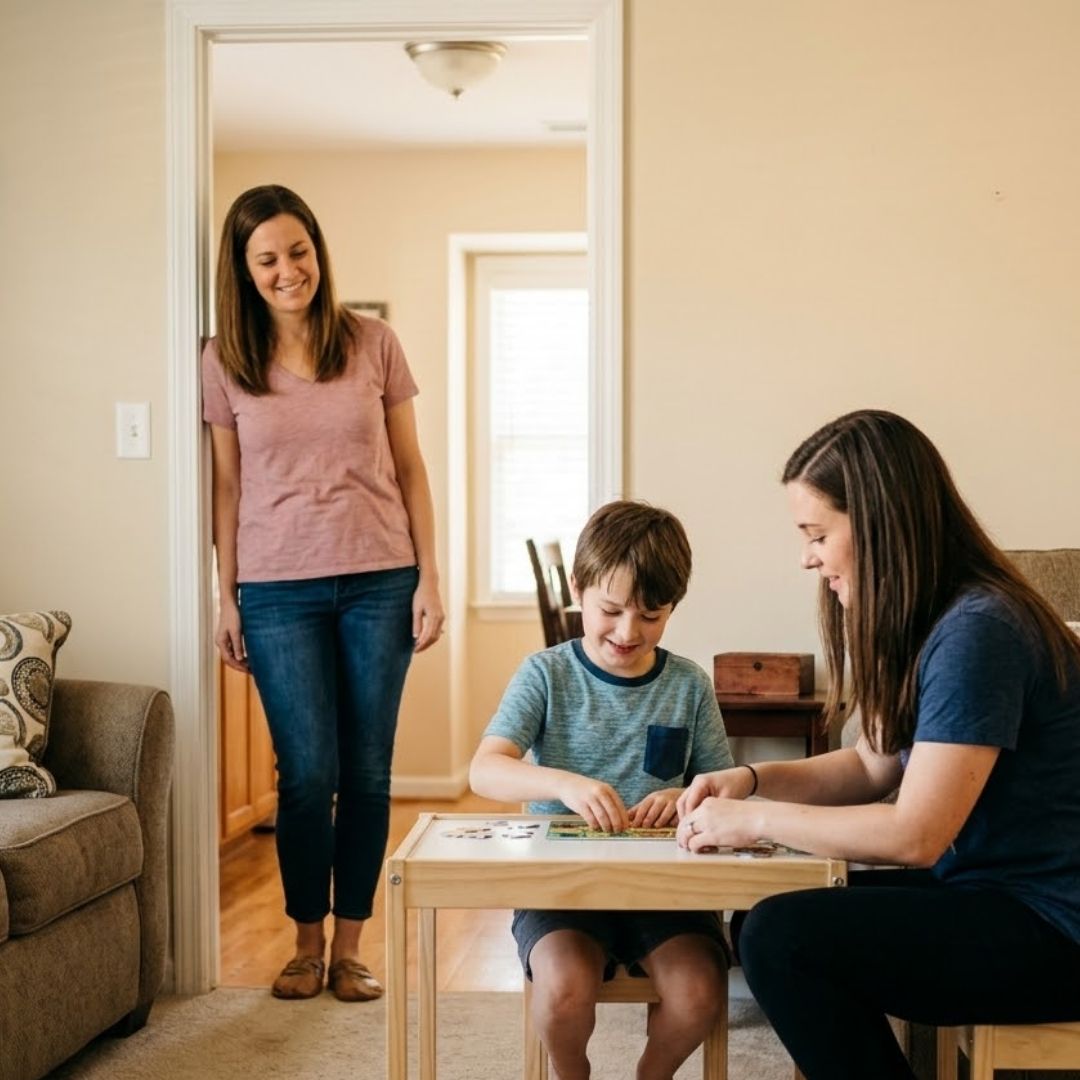
While both settings encourage family participation, the dynamic changes based on location. Home therapy provides unparalleled opportunities for immediate parent and sibling involvement. Therapists can naturally demonstrate techniques during your actual family routines, making parent coaching highly accessible. Clinics also offer robust parent training, but it typically occurs during scheduled sessions rather than organically unfolding during your typical family afternoon.
Recognizing and Addressing Real-Time Needs
Therapists working in the home can observe specific behavioral triggers that only occur in that space, addressing early signs of autism directly in context. Clinic therapists, meanwhile, can closely monitor how a child reacts to new, shared environments and unfamiliar transitions. Both approaches utilize rigorous data collection to adapt interventions, ensuring your child continuously progresses toward their individualized milestones.
Reach Out for Expert Guidance
At Children’s Milestone, serving Maryland, Virginia, and DC, we believe the best learning happens right where you live. By exclusively offering in-home ABA therapy, we ensure your family receives personalized, evidence-based applied behavior analysis that seamlessly integrates into your daily life. Reach out to our compassionate team today to empower your child in the comfort of their own home.