
As a parent, you may often ask yourself, “Why does my child do that?” In Applied Behavior Analysis, we know that all behaviors serve a purpose. At Children’s Milestone, serving families in MD, DC, and VA, we help you understand the ‘why’ behind behaviors in autism therapy. This guide explores the four main functions of behavior, offering a framework to understand your Autistic child’s actions and needs more clearly.

Attention
One of the most common functions of behavior is to gain social attention from others. This can be for positive attention, like praise, or even negative attention, like being told “no.” For example, if an Autistic child consistently makes a loud noise and you immediately look over, the behavior may be reinforced by your attention. The goal isn’t to be “bad,” but to achieve a social connection.

Escape/Avoidance
This function occurs when an individual wants to get out of or avoid a task or situation they find unpleasant (Khan Academy, n.d.). If a task is too difficult, overwhelming, or simply non-preferred, a child might engage in a specific behavior to delay or stop it. For instance, a child might slide out of their chair right before a challenging homework assignment begins.
Access
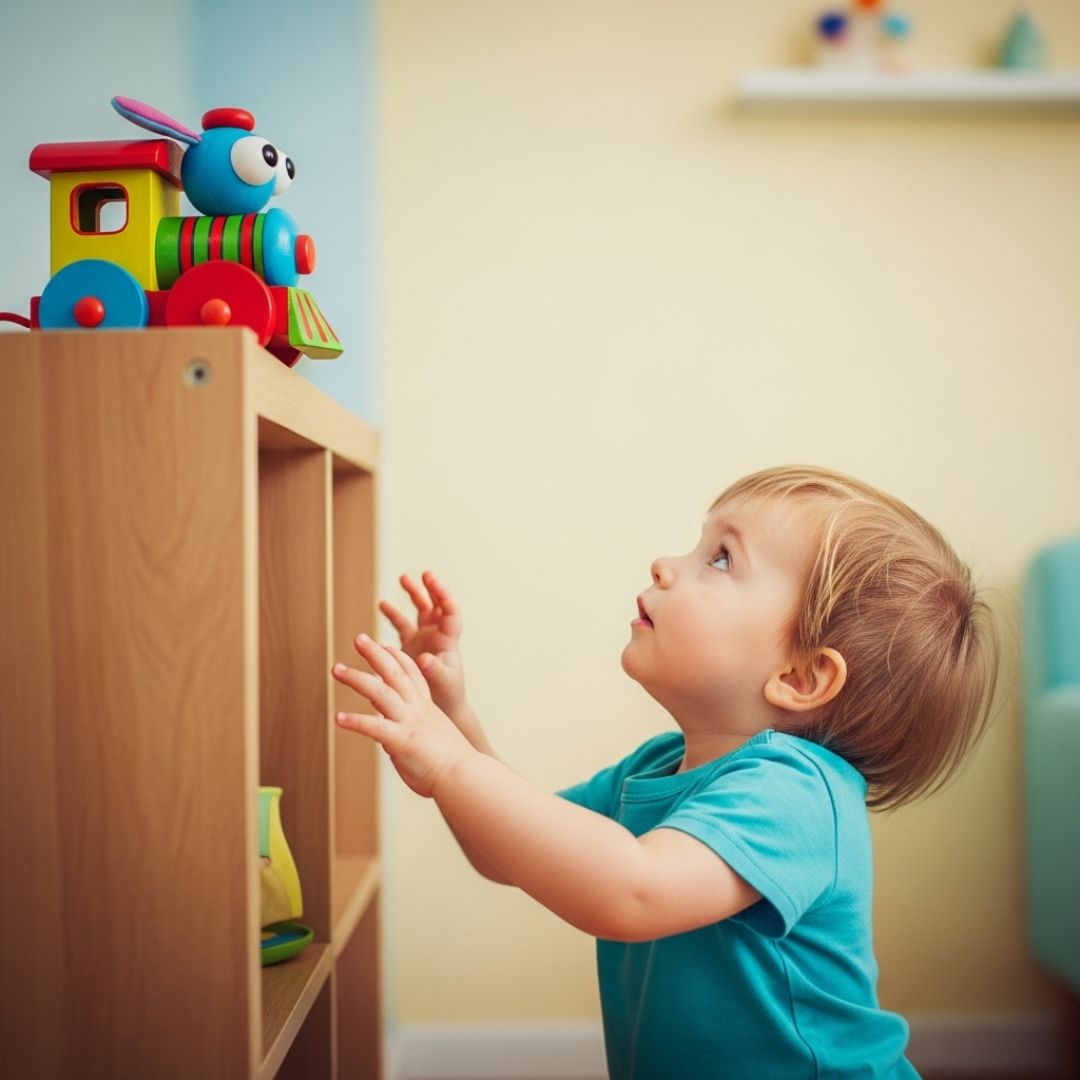
Sometimes, a behavior occurs simply because a child wants to gain access to a preferred item or activity. This is often one of the more straightforward functions to identify. A child crying or grabbing in the grocery store aisle is a classic example of behavior driven by the desire to get access to a tangible item, like a specific snack or toy.

Automatic/Sensory Stimulation
Unlike the other three functions, this one is not socially mediated. The behavior itself feels good or provides some form of internal reinforcement that is automatically produced by the action. Behaviors like hand-flapping, humming, or rocking can provide calming or pleasurable sensory input (Case study 4., n.d.). This functional approach to understanding behavior is a foundational and well-researched principle in ABA therapy that helps guide effective and compassionate support strategies.
Identifying the “why” is the critical first step toward helping your child develop alternative, effective ways to get their needs met. Understanding the function of a behavior allows our team to create a personalized and compassionate ABA therapy plan. If you’re in Maryland, D.C., or Virginia and ready to explore how our approach at Children’s Milestone can support your family, contact us today to schedule a consultation.
References:
Case study 4. (n.d.). Best Practice: Sensory. https://sensory-processing.middletownautism.com/casestudies/case-study-4/
Operant conditioning: Escape and avoidance learning (video). (n.d.). Khan Academy. https://www.khanacademy.org/test-prep/mcat/behavior/learning-slug/v/operant-conditioning-escape-and-avoidance-learning